
About Halma
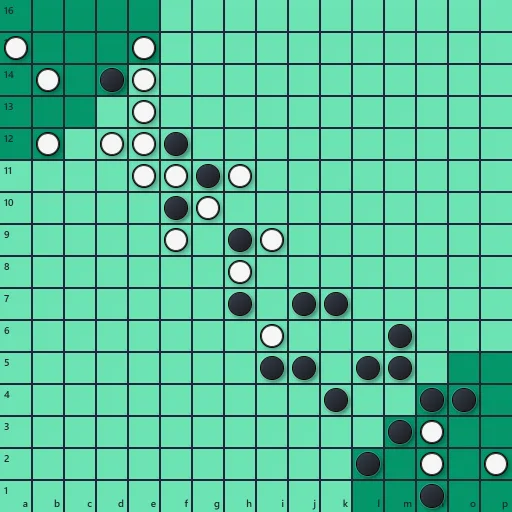
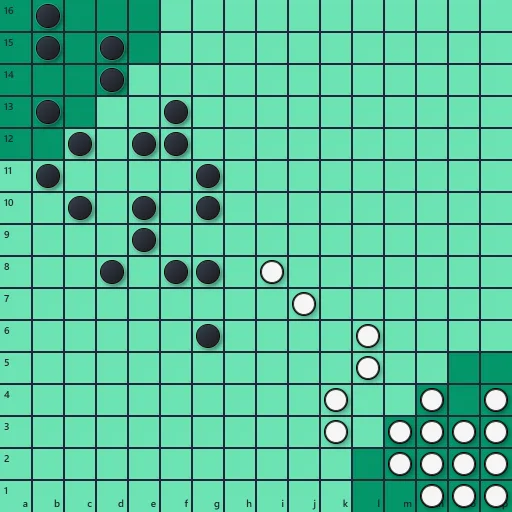
Halma is the 1883 original that Chinese Checkers grew out of, played here as a one-on-one duel against the computer on the full 16 by 16 board. Each side owns a 19-piece camp in one corner and races every piece into the camp diagonally opposite.
There are no captures and nothing to defend. The whole game is the ladder: space your pieces so each one can hop over the next, and a single turn can carry a piece the length of the board. The player who moves as one group, rather than sprinting one piece ahead, is usually the one who arrives first.
Try Halma variants
Play Halma vs AI
Play Halma online against the computer at ten strength levels, from a gentle introduction to an engine that plans its jump ladders several turns ahead. Nothing is hidden and nothing is random, so every game is a pure test of planning.
Start by hunting for the longest chain available each turn, then start looking one move further: the move that sets up next turn's chain is usually worth more than the longest hop on the board right now.
How to play Halma
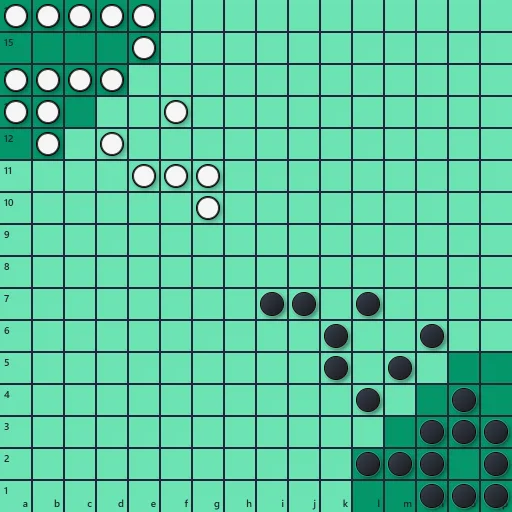
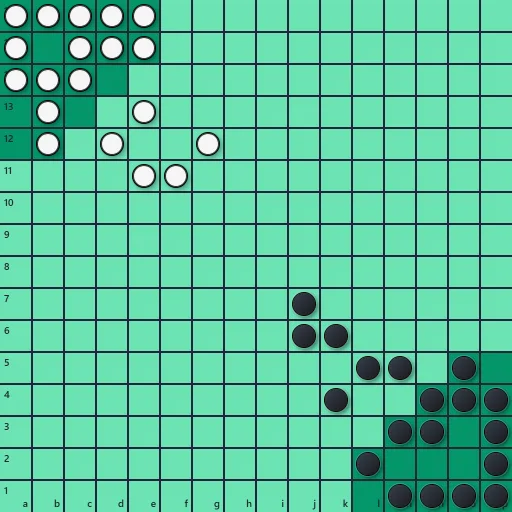
The Halma rules take a minute to learn. On your turn you move one piece, either one step into an empty neighbouring square in any of the eight directions, or a hop over an adjacent piece of either colour into the empty square just beyond it.
Hops chain, so one turn can cross the whole board. Pieces are never captured, a piece that reaches the opposing camp may not leave it again, and the first player to fill all 19 squares of the opposing camp wins.
Improve by learning strategy
Good Halma strategy is about shape rather than speed. Keep your pieces spaced so that every one of them has something to hop over, stay near the main diagonal where the two camps face each other, and let the group carry itself across.
The game ends when your last piece arrives, so bring the deep corner pieces out early and fill your destination camp from its far corner inwards. A single straggler with nothing left to hop over can cost a game that looked won.
Frequently Asked Questions
Halma came first, in 1883, and is played on a 16x16 square grid with 19 pieces a side moving in eight directions. Chinese Checkers is a later German redesign called Sternhalma that moved the same idea onto a six-pointed star, where each player has 10 pieces and six directions of movement. The step-or-hop mechanic and the race to the opposite camp are identical; the geometry is not.
Similar games you might like
If you enjoy Halma, you will probably like these other abstract strategy board games.
Learn, Play, and Have Fun!
Ready to play Halma online? Start a match against the computer now. No signup, no friction.