
About Dots and Boxes
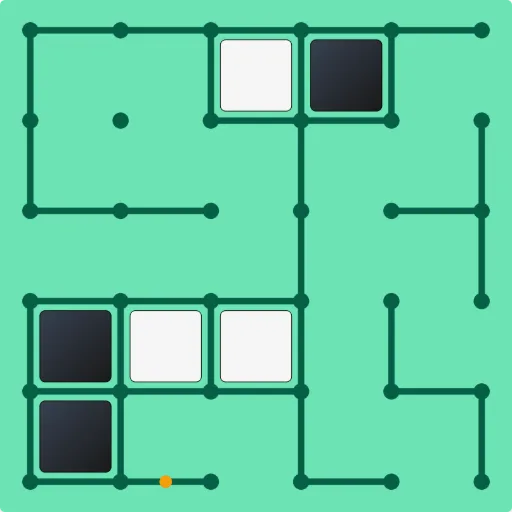
Dots and Boxes is the pencil-and-paper game almost everyone has played in the margin of a notebook. Two players take turns joining neighbouring dots, and closing the fourth side of a square wins that box and an immediate extra turn.
The rules take ten seconds to learn and the strategy takes years to exhaust. Behind the simple grid sits a genuine combinatorial game, complete with chains, loops, sacrifices and parity counting. A common surprise for new players is that the one grabbing boxes early is usually the one losing.
Play Dots and Boxes vs AI
The computer plays on a 5x5 board of 25 boxes, at levels from beginner to expert: the lower levels will happily trade boxes with you, while the stronger ones count safe moves and set up chain sacrifices.
Every game is a lesson in restraint. The computer will not open a chain for you, so you have to learn to run your opponent out of harmless moves instead of chasing points.
How to play Dots and Boxes
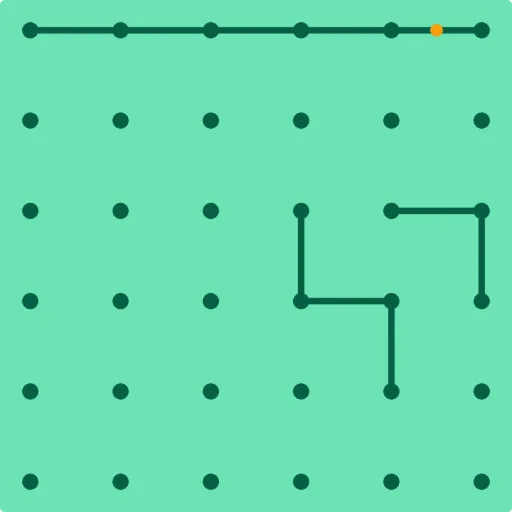
The Dots and Boxes rules fit in a sentence: draw one line between two adjacent dots, and if you complete a box you claim it and move again.
The subtlety is in what you are allowed to avoid. You cannot pass, so once the safe lines are gone you must give something away. Understanding exactly what a move costs is the whole game.
Improve by learning strategy
Good Dots and Boxes strategy starts with a rule of thumb: never draw the third side of a box while safe moves remain. From there it becomes a counting exercise about who runs out of harmless lines first.
The advanced layer is chain control. Learn the double cross, where you decline the last two boxes of a chain to force your opponent to open the next one, and learn to count long chains so the parity falls your way. Those two ideas turn a casual doodle into a game you can genuinely master.
Frequently Asked Questions
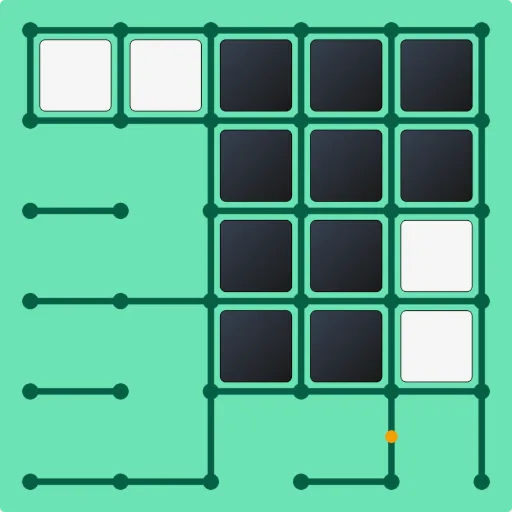
Players alternate drawing one line between two adjacent dots. Completing the fourth side of a small square claims that box and earns you another turn straight away, so a good move can cascade into a long run of captures. When every line has been drawn, whoever owns the most boxes wins.
Yes, and it is the rule that makes the game interesting. After closing a box you must move again, which means a single opening can let your opponent take an entire chain of boxes in one turn. It also means you cannot pass, so late in the game you can be forced into a move that helps your opponent.
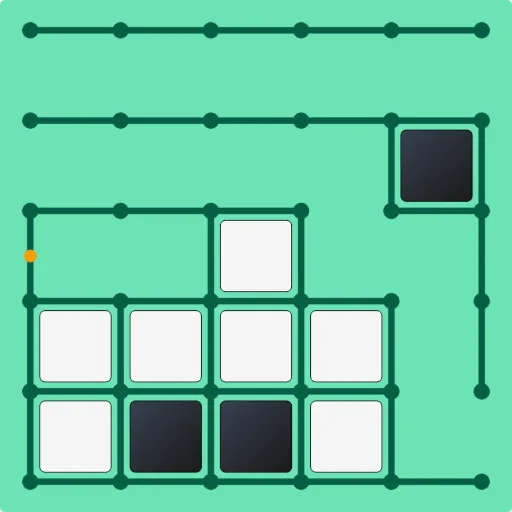
A chain is a run of boxes linked so that opening any one of them lets the opponent take all of them in a single turn. Chains of three or more boxes are the currency of the endgame. Counting them and controlling who is forced to open the first one is what separates casual play from strong play.
When handed a chain, instead of taking every box you take all but the last two and then draw the line dividing those two. You give up two boxes, but your opponent is left to move and must open the next chain for you. Repeated across several chains, this trade almost always wins more than it costs.
Not automatically. On a 5x5 board the advantage depends on the parity of the long chains that eventually form, which both players can influence. The first player generally wants an even number of long chains and the second player an odd number, so the opening is really a fight over the shape of the endgame.
Similar games you might like
If you enjoy Dots and Boxes, you will probably like these other abstract strategy board games.



Learn, Play, and Have Fun!
Ready to play Dots and Boxes online? Start a match against the computer now. No signup, no friction.